Nectar, Poison, and the Nature Within
Bala Kanda, Doha 5ख
Doha 5ख · Movement 2 of 2
Keep this contemplation
Preserve, print, or share
Two vessels stand after the churning of the ocean. One holds nectar, honoured because it confers deathlessness. The other holds poison, terrible and renowned because death travels within it.
Neither is mistaken for the other. Each is known by the power it carries and the result it gives. In the same way, the noble heart finds and enlarges goodness, while the base nature bends toward what is low.
The verse leaves no ornament around this discernment. Fruit reveals the tree. Consequence reveals the substance. What a heart repeatedly seeks through the world discloses the world it has built within itself.
Nectar and poison gleam beneath the same light, each faithful to its nature.
Read the passage from the Manas
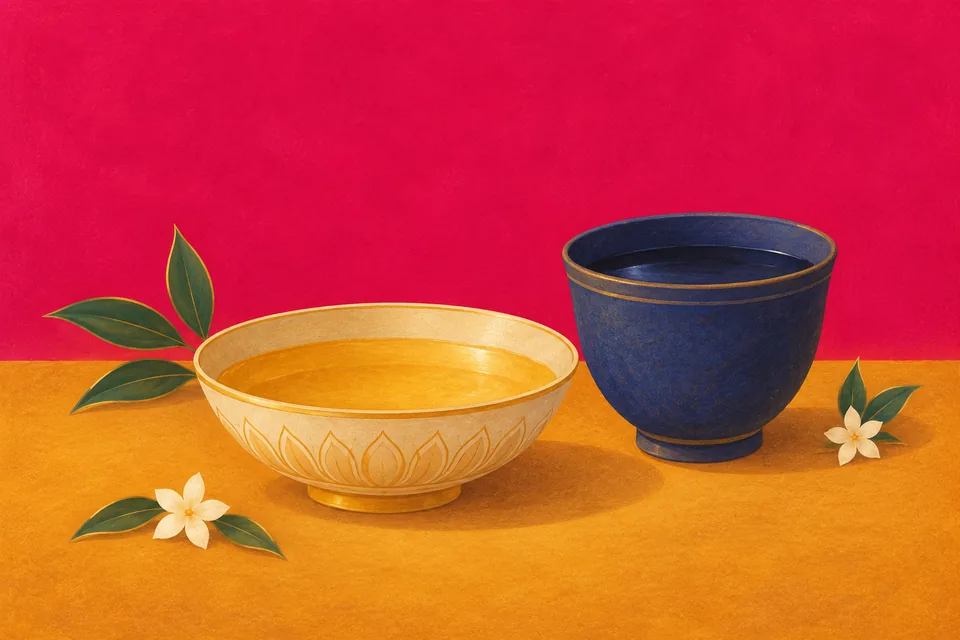
AI-created devotional illustration · Doha 5ख
Two symbolic vessels, one luminous and one shadowed, represent the source’s comparison of nectar and poison.
Source reference and artistic choices
Gita Press code81 undated · PDF pages 27 · printed pages 25. Reader passage: bala-kanda-doha-006. Printed numbering may differ.
Source facts
- Good people take goodness; base people take baseness
- Nectar praised for immortality and poison for death in the source comparison
Artistic choices
- Two symbolic vessels, colours and layout express source comparison; not real labelled substances
- No actual drinking, medical effect or narrated historical event
- Small leaves and flowers are decorative setting additions
An imaginative interpretation, not a historical portrait or documentary evidence.
भलो भलाइहि पै लहइ लहइ निचाइहि नीचु। सुधा सराहिअ अमरताँ गरल सराहिअ मीचु।।5।।
The good finds only goodness; the low finds only lowness. Nectar is praised because it grants immortality. Poison is praised because it brings death. Each is known by its own nature.