Lotus and Leech in One Water
Bala Kanda, Chaupai 5
Doha 5ख · Movement 1 of 2
Keep this contemplation
Preserve, print, or share
A crow may be raised with tenderness and fed from a loving hand, yet its appetite follows its nature. Tulsidas has made his entreaty to the hostile and knows that persuasion cannot always turn what has hardened within.
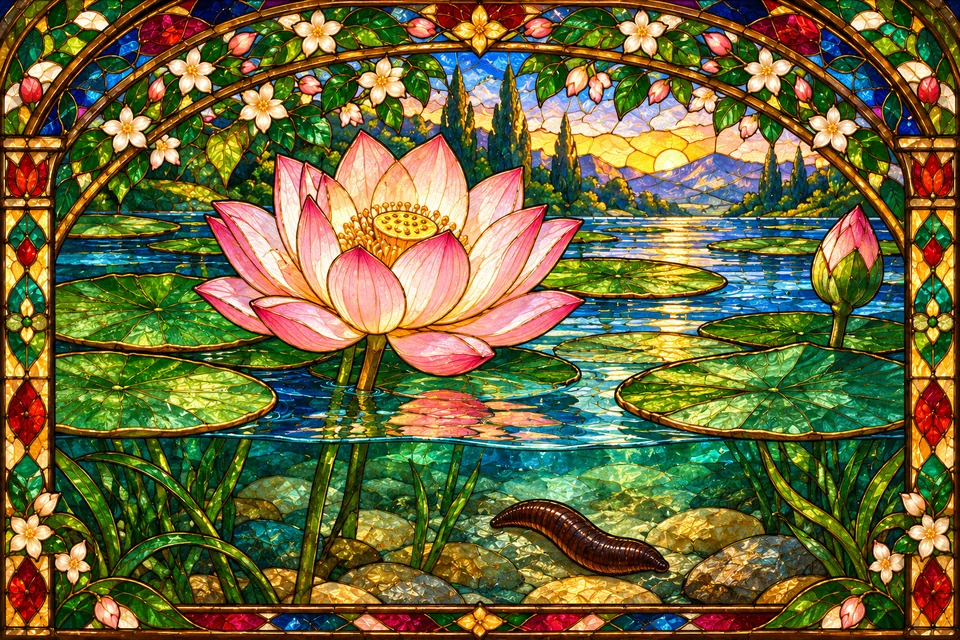
He bows again to saints and to the wicked, two presences that bring opposite sorrows. Separation from a saint can draw the life from the heart. Encounter with the wicked can fill that heart with pain. Both arise in the same world, as lotus and leech are born in the same water, yet one opens toward the sun while the other fastens upon blood.
Nectar and wine emerge from the same unfathomable ocean. Deeds reveal their difference. Saints enter the company of the moon, the Ganga, and life giving sweetness. The destructive gather with poison, fire, disease, and the dark current of sin. Each being is drawn toward what accords with the nature it has cultivated.
At dawn, the lotus opens above the water where the leech still clings below.
Read the passage from the Manas
AI-created devotional illustration · Chaupai 5
A lotus above calm water and a small leech below it, symbolizing different qualities arising in the same environment.
Source reference and artistic choices
Gita Press code81 undated · PDF pages 26, 27 · printed pages 24, 25. Reader passage: bala-kanda-chaupai-005. Printed numbering may differ.
Source facts
- Courteous appeal may not change harmful disposition, compared with a crow's eating habits
- Saints and unvirtuous people cause differing kinds of pain: separation from saints and contact with harmful people
- Different qualities arising together compared to lotus and leech from the same water, nectar and liquor from one ocean; virtue and vice differ through deeds
Artistic choices
- Lotus and leech are selected as a symbolic juxtaposition; no literal episode or named human identities
- Invented water, stones, botanical positions and stained-glass floral frame
An imaginative interpretation, not a historical portrait or documentary evidence.
मैं अपनी दिसि कीन्ह निहोरा। तिन्ह निज ओर न लाउब भोरा।। बायस पलिअहिं अति अनुरागा। होहिं निरामिष कबहुँ कि कागा।। बंदउँ संत असज्जन चरना। दुखप्रद उभय बीच कछु बरना।। बिछुरत एक प्रान हरि लेहीं। मिलत एक दुख दारुन देहीं।। उपजहिं एक संग जग माहीं। जलज जोंक जिमि गुन बिलगाहीं।। सुधा सुरा सम साधू असाधू। जनक एक जग जलधि अगाधू।। भल अनभल निज निज करतूती। लहत सुजस अपलोक बिभूती।। सुधा सुधाकर सुरसरि साधू। गरल अनल कलिमल सरि ब्याधू।। गुन अवगुन जानत सब कोई। जो जेहि भाव नीक तेहि सोई।।
I have made my humble entreaty from my side, but they will never turn from their own nature. You may raise crows with the deepest love, yet crows will never become vegetarian. I bow at the feet of both saints and the wicked, and I describe something of the difference between the two, for both bring suffering in their own way. Separation from one takes away life itself; meeting the other inflicts terrible pain.