No Measure Can Hold Their Violence
Bala Kanda, Doha 183
Doha 183 · Movement 3 of 3
Keep this contemplation
Preserve, print, or share
The Katha reaches the limit of description. The evil committed by Ravana's hosts is too terrible and too extensive for language to carry scene by scene.
Violence is not merely their instrument. They love it, returning to harm with an appetite that grows through indulgence. Village, hermitage, family, sacrifice, memory, and trust all become fields for the same delight in destruction.
What boundary can be placed around such sin? The question leaves the darkness open rather than decorating it with excess detail. The immeasurable harm itself becomes the cry that will summon immeasurable compassion into human form.
Language stops at the edge of their violence, and the wounded earth carries the rest.
Read the passage from the Manas
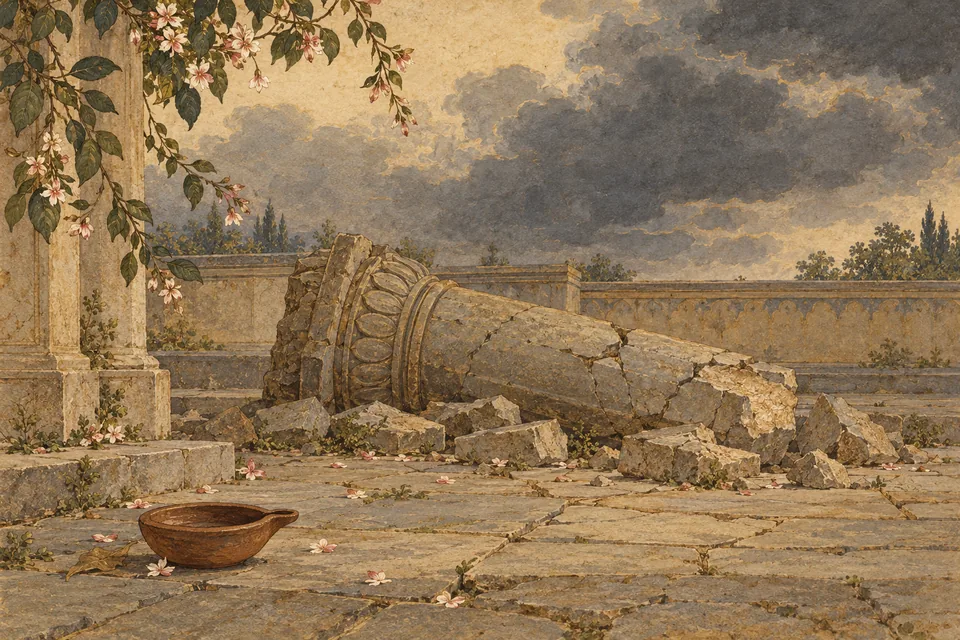
AI-created devotional illustration · Doha 183
Source soratha183: Rakshasa injustice beyond description, love of violence and unbounded sins; symbolic aftermath
Source reference and artistic choices
Gita Press code81 undated · PDF pages 186 · printed pages 184. Reader passage: bala-kanda-doha-184. Printed numbering may differ.
Source facts
- The Rakshasas' terrible injustice cannot be described; their love of violence is intense, rhetorical question asks what LIMIT to their sins. Exact phrase कवनि मिति, not absent/invented kavani maryada.
- Witness labels SORATHA183; stable reader ID184/typeDoha unchanged. Displaced queens sharing letter/Dasharatha praising sons not scene evidence.
Artistic choices
- CLEARLY NONLITERAL symbolic damaged courtyard: one fallen cracked stone pillar, chipped floor, one unlit earthen lamp, sparse flower bough and shadowy slate clouds. No specific courtyard, lamp, pillar damage or weather is asserted by verse; chosen artistic metaphor evokes wrongdoing.
- Architecture/cracks/garden/site/light imaginary, no victims or actual violence performed, no actual historic/news aftermath or authentic Lanka claim. No Earthcow before its following passage and no letter/queen scene.
An imaginative interpretation, not a historical portrait or documentary evidence.
बरनि न जाइ अनीति घोर निसाचर जो करहिं। हिंसा पर अति प्रीति तिन्ह के पापहि कवनि मिति।।183।।
The terrible evil that the rakshasas commit cannot be put into words. Their love for violence knows no limit. What boundary can there be to their sins?