From Bhang to Tulsi
Bala Kanda, Doha 26
Doha 26 · Movement 2 of 2
Keep this contemplation
Preserve, print, or share
In the rough ground of Kali grows bhang, wild, intoxicating, and counted of little worth. Tulsidas sees his former self there, a neglected weed with no fragrance fit for worship. He does not hide behind the dignity of the poet he has become.
Above that ground spreads the Ram Name like a wish fulfilling tree, its roots deeper than the age's corruption and its branches sheltering every sincere remembrance. Beneath its grace, the weed changes. Green tulsi leaves rise where bhang had grown, fragrant, sacred, and ready to be offered at the Lord's feet.
The poet places his own life before the reader as testimony. The Name did not merely improve the plant. It revealed a new nature.
Where the wild weed stood, tulsi releases its fragrance into the dark age.
Read the passage from the Manas
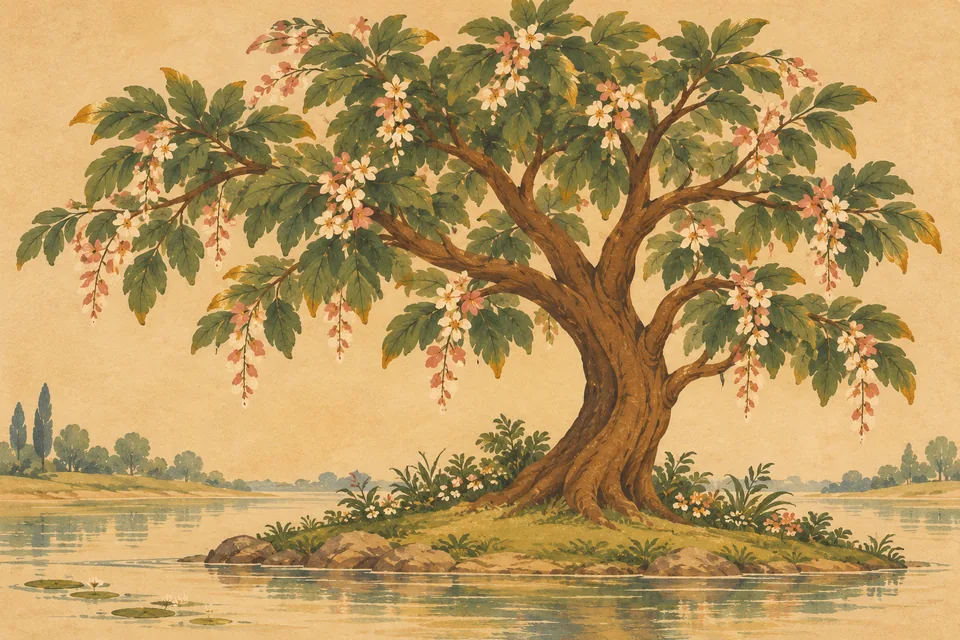
AI-created devotional illustration · Doha 26
An imagined flowering wish-tree evokes the source's kalpataru comparison for Rama's Name.
Source reference and artistic choices
Gita Press code81 undated · PDF pages 50 · printed pages 48. Reader passage: bala-kanda-doha-027. Printed numbering may differ.
Source facts
- Rama's Name called a kalpataru and abode of welfare in Kali
- Poet compares remembrance making himself tulsi from bhang
Artistic choices
- Imagined wish-tree selects first comparison; no exact botanical species or material wish fulfilled
- Tree, leaves, flowers, light, island and water imagined; no physical plant transformation
An imaginative interpretation, not a historical portrait or documentary evidence.
नामु राम को कलपतरु कलि कल्यान निवासु। जो सुमिरत भयो भाँग तें तुलसी तुलसीदासु।।26।।
Ram's Name is the wish-fulfilling tree, the very abode of well-being in the Kali Yuga. By remembering it, Tulsidas, who was no better than bhang, a worthless weed, became tulsi, the sacred basil.