Shatananda Sends Sita toward Ram
Bala Kanda, Chaupai 260
Doha 263 · Movement 1 of 2
Keep this contemplation
Preserve, print, or share
Cymbals, mridangas, conches, shehnais, kettle drums, dhols, and dundubhis fill the pavilion. Young women sing auspicious songs. Sunayana revives like parched grain beneath rain, and Janaka finds ground beneath him like a swimmer exhausted in deep water.
The defeated kings fade as oil lamps lose their brightness at daybreak. Sita receives the long-awaited moment like a chataki bird drinking rain beneath the Swati star. Nearby, Lakshmana gazes upon Ram as a young chakora looks toward the moon.
Music, relief, defeat, devotion, and love occupy the same hall. Then Shatananda gives the formal command. Sita is to approach Ram. The event that heaven has already celebrated now waits for the princess to cross the ceremonial ground with the garland in her hands.
Through drums and wedding songs, Shatananda's command opens a path from Sita to Ram.
Read the passage from the Manas
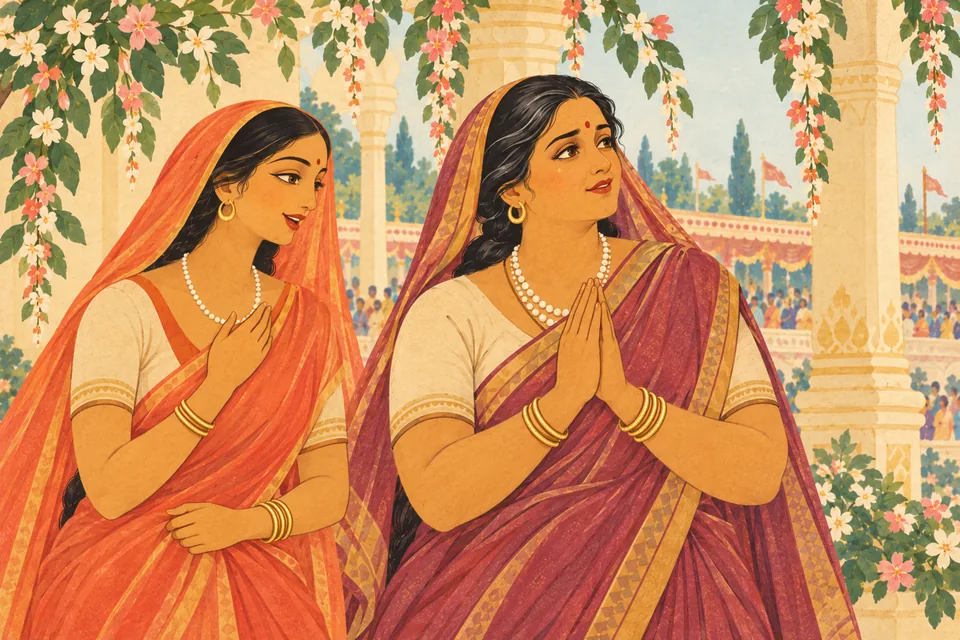
AI-created devotional illustration · Chaupai 260
Full eight retained; selected Queen with one companion joyful sourceportion3 using earlier mother model by local narrative continuity.
Source reference and artistic choices
Gita Press code81 undated · PDF pages 256 · printed pages 254. Reader passage: bala-kanda-chaupai-260. Printed numbering may differ.
Source facts
- 1 Cymbals mridang conch shehnai bheri dhol dundubhi sound.
- 2 Many pleasing instruments; young women everywhere auspicious songs.
- 3 QUEEN WITH COMPANIONS extremely happy LIKE WATER on DRYING RICE; not sea/seawater irrigation.
- 4 Janaka relieved of worry like tired swimmer finds bottom; simile no current drowning.
- 5 Defeated kings lose radiance like lamps in daylight.
- 6 Sita happiness like chataka receiving Swati rainwater; simile.
- 7 Lakshmana gazes Rama like young chakora at moon; simile.
- 8 SATANANDA gives order THEN SITA approaches RAMA; not Vishvamitra actor substitution.
Artistic choices
- PASS TWO foregroundheads FOURconnectedOWNarms FOURnaturalOWNhands. QueenRIGHT maturefuller warmgoldenbrown blackgreyhair deepMAUVEgoldveil ivoryblouse pearlsbindi NOheadgarland/earflower, BOTHNAMASTEpalms distinctwrists chest brownOPENeyes UPRIGHT joyful PARTEDsmile no tears. CompanionLEFT mediumbrownoval coralorangegoldveil lowblackhair pearlsbindi noearflower/headgarland ownRIGHTchest ownLEFTwaist OPENeyes RIGHT atqueen gentlePARTEDsmile. Soft unnamed assembly background no exact identity/head/limb/seat/motion census. No literal rice/sea/swimmer/bird/moon events.
- Exact poses/gazes/numerical ages/materials flower species/ornament counts architecture spatial framing and cap/headgarland wearing-time are artist choices. Full source retained, actors outside crop not denied, no exact full assembly/companion/head/limb/seat/motion census. Source similes not literal sea/swimmer/bird/lunar/lotus physical events; missing Hindi and original variants unchanged, no live corpus edits.
- Queen uses prior unnamed Sita mother model by local narrative continuity; proper name Sunayana not sourced locally. Companion current anonymous artist appearance reused, not historically authenticated same individual. Natural joy after earlier distress; all eight retain named Satananda order separate from Guru Vishvamitra. Selected one companion not all-source count.
An imaginative interpretation, not a historical portrait or documentary evidence.
झाँझि मृदंग संख सहनाई। भेरि ढोल दुंदुभी सुहाई।। बाजहिं बहु बाजने सुहाए। जहँ तहँ जुबतिन्ह मंगल गाए।। सखिन्ह सहित हरषी अति रानी। सूखत धान परा जनु पानी।। जनक लहेउ सुखु सोचु बिहाई। पैरत थकें थाह जनु पाई।। श्रीहत भए भूप धनु टूटे। जैसें दिवस दीप छबि छूटे।। सीय सुखहि बरनिअ केहि भाँती। जनु चातकी पाइ जलु स्वाती।। रामहि लखनु बिलोकत कैसें। ससिहि चकोर किसोरकु जैसें।। सतानंद तब आयसु दीन्हा। सीताँ गमनु राम पहिं कीन्हा।।
Cymbals, mridanga, conch shells, and shehnai resounded, along with bheri, dhol, and dundubhi drums. Many beautiful instruments played together, and everywhere young women sang auspicious songs. The queen rejoiced greatly among her companions, like parched grain that has received life-giving rain. King Janaka found happiness, setting aside all worry, like a weary swimmer who at last finds solid ground. The rival kings grew dejected when the bow broke, like the beauty of oil lamps fading when daylight arrives. How can one describe Sita's joy? She was like a chaataki bird receiving the long-awaited water of the Svaati star. How tenderly Lakshmana gazed at Rama, like a young chakora bird gazing upon the moon. Then Satananda gave the command, and Sita made her way toward Rama.