Names Given Beneath the Royal Canopy
Bala Kanda, Chaupai 195
Doha 197 · Movement 1 of 2
Keep this contemplation
Preserve, print, or share
Days and nights pass through the palace without anyone feeling their weight. Joy has loosened the ordinary measure of time. Lamps are replenished, conches sound at the appointed hours, and the four infant princes rest beneath the watch of a household that seems to have forgotten every former sorrow.
When the hour for the naming rite arrives, Dasharatha summons the wise sages. The king receives them with worship and bends before their discernment. Beneath the ceremonial canopy, Vedic sound fills the hall while the children lie among flowers, vessels of clear water, and the gathered gaze of the royal family. The sage begins to reveal names already vast enough to hold destinies.
Ram is named as the ocean of bliss, the resting place whose smallest drop brings happiness to the three worlds. Bharat is named for the power that bears and nourishes the universe. Shatrughna is named for the remembrance before which enemies are destroyed. These are not ornaments placed upon royal children. They are doors opening from the cradle into the hidden architecture of the Leela.
The names cross the hall, and three worlds receive them.
Read the passage from the Manas
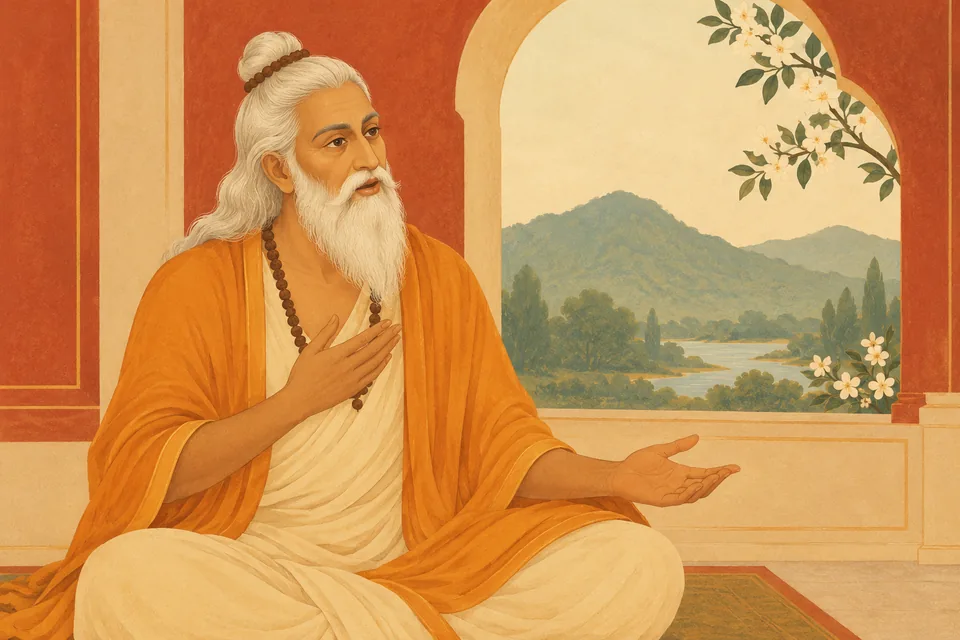
AI-created devotional illustration · Chaupai 195
The single sage Vasishtha tells the king he will speak names according to his understanding
Source reference and artistic choices
Gita Press code81 undated · PDF pages 198, 199 · printed pages 196, 197. Reader passage: bala-kanda-chaupai-195. Printed numbering may differ.
Source facts
- ALL8: dayspass unnoticeddaynight, namingoccasion kingsummons ONEWISESAGE Vasishtha notmanysages; worshipsasksconsiderednames. Sagesayschildren haveMANYincomparablenames andwillSPEAKaccordingOWNUNDERSTANDING notassignmanynamesEACH.
- RAMA blissOCEAN happinesstreasure onedroprefreshesTHREEWORLDS restALLWORLDS. BHARATA nourishesWORLD; SHATRUGHNA nameVedadeclared recallingdestroysENEMIES. LakshmananamingfollowingD198? sourceDOHA197 notcurrentC195; no newsourceunit merged.
- Selected4 Vasishthaspeaking, kingchildrenoutsidecrop, ocean/happiness notliteralphysicalmiracle.
Artistic choices
- NEW Vasishtha afterapprovedledgersearchnoestablishedportrait: elderly~70 warmmediumbrown elongatedrectangularface broadnose browneyes fullstraightwhitebeard/moustache shoulderwhitehair compactWHITETOPKNOT, creamdhoti ochreshawl torso wood/rudrakshabeads noforeheadmark crownveena. Artistageidentityfeatures notauthenticatedportrait; distinctD172lowbunroyalpriest/D187highgraycoilunnamedMuni.
- Twoownhands onechest otheropenlowexplainingpalm eyesopen slightmouthopen, seatedmatwaistlegsoutsidecropfeetunpictured. Rustcreamarch spareflowers river/mountain field palacecontext imaginary.
An imaginative interpretation, not a historical portrait or documentary evidence.
कछुक दिवस बीते एहि भाँती। जात न जानिअ दिन अरु राती।। नामकरन कर अवसरु जानी। भूप बोलि पठए मुनि ग्यानी।। करि पूजा भूपति अस भाषा। धरिअ नाम जो मुनि गुनि राखा।। इन्ह के नाम अनेक अनूपा। मैं नृप कहब स्वमति अनुरूपा।। जो आनंद सिंधु सुखरासी। सीकर तें त्रैलोक सुपासी।। सो सुख धाम राम अस नामा। अखिल लोक दायक बिश्रामा।। बिस्व भरन पोषन कर जोई। ताकर नाम भरत अस होई।। जाके सुमिरन तें रिपु नासा। नाम सत्रुहन बेद प्रकासा।।
Some days passed in this way, day and night slipping by unnoticed, so deep was the joy. Knowing that the time for the Naamkarana (naming ceremony) had arrived, the king sent for the wise Guru Vasishtha.