Ayodhya Becomes a Night Made of Jewels
Bala Kanda, Chaupai 193
Doha 195 · Movement 1 of 2
Keep this contemplation
Preserve, print, or share
Kaikeyi and Sumitra also give birth to beautiful sons. The prosperity, auspiciousness, and gathering joy exceed the descriptive powers of Saraswati and Shesha. Four divine children now rest within the royal house.
Ayodhya shines as though night itself has come to behold Ram. Incense smoke gives the darkness, red powder the glow of dawn, jewelled temples the stars, and golden palace pinnacles the generous moon. Vedic chanting from homes becomes the sweet chorus of waking birds.
The spectacle confuses even the moths of time. Day and night lose their familiar boundary while celebration continues. A whole month passes without anyone understanding how long the wondrous city has remained inside its luminous hour.
Incense becomes night, temples become stars, and Ayodhya refuses to let the birth hour end.
Read the passage from the Manas
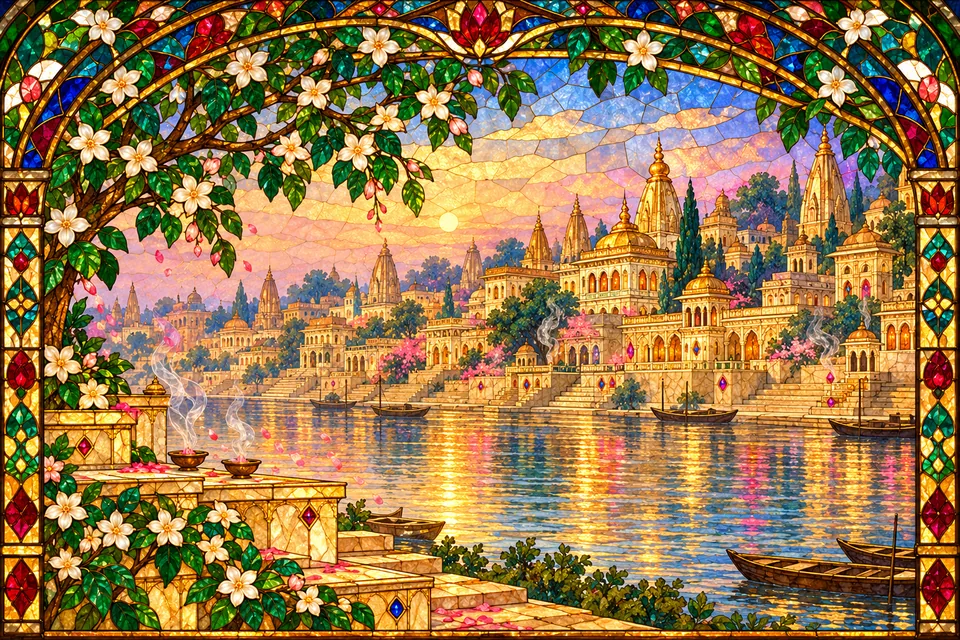
AI-created devotional illustration · Chaupai 193
Ayodhya’s twilight simile: incense darkness, abir rosy glow, palace jewels stars and royal kalash moon
Source reference and artistic choices
Gita Press code81 undated · PDF pages 197 · printed pages 195. Reader passage: bala-kanda-chaupai-193. Printed numbering may differ.
Source facts
- ALL8: KAIKEYI daughterofKEKAYA andSUMITRA TWO mothers alsohavebeautifulsons, notKaikeyi'sdaughter givingbirth orSumitra'stwofoodportions. Joywealthtimegathering beyondSHARADA/AHIRAJ telling.
- Ayodhya shinesasNIGHTcamemeetLord; NIGHT seesSUN feelsSHY takesTWILIGHTform, notsunshy. AGARincensesmoke darkness ABIRrosyglow, jewelsontemples/palaces starclusters, royalpalaceKALASH moonanalogue notdome.
- SweetVedicchantingsounds fromhouses liketimeappropriatebirds, notexplicitdawn. PATANG hereSUN forgetsowncourse inwonder monthpasses notmoths. Selected3-6 metaphoriccity, physical sun/nightpersonification/monthelapsed notactuallyverified.
Artistic choices
- Approved C016 imaginedAyodhya creamgoldpalaces pointedtempletowers riversteps/Sarayu generalsite retained; exactlayoutbuildingsboats notdocumentarymap. E03 luminousglass riverfront floralarch jeweledwallglints goldroofKALASH, no literalstarsmooninsky.
- Two tinyearthenincensebowls palegraywisps nearforeground, pinkabirhaze artistrealization simile. Onevisiblepalegoldsun androse-lit sky evokesTWILIGHT comparison notcertifiedactualclock/sunset aftermidday orphysicalnightwoman. Foregroundgarden architecturejewelcounts finiteartistchoices, no actualmothers/babies/sunface/moths.
An imaginative interpretation, not a historical portrait or documentary evidence.
कैकयसुता सुमित्रा दोऊ। सुंदर सुत जनमत भैं ओऊ।। वह सुख संपति समय समाजा। कहि न सकइ सारद अहिराजा।। अवधपुरी सोहइ एहि भाँती। प्रभुहि मिलन आई जनु राती।। देखि भानू जनु मन सकुचानी। तदपि बनी संध्या अनुमानी।। अगर धूप बहु जनु अँधिआरी। उड़इ अभीर मनहुँ अरुनारी।। मंदिर मनि समूह जनु तारा। नृप गृह कलस सो इंदु उदारा।। भवन बेदधुनि अति मृदु बानी। जनु खग मूखर समयँ जनु सानी।। कौतुक देखि पतंग भुलाना। एक मास तेइँ जात न जाना।।
Kaikeyi and both portions of Sumitra also gave birth to beautiful sons. That happiness, that wealth, that moment, that gathering. Even Saraswati and Shesha, the thousand-tongued serpent, cannot describe them.