The Princess Who Is Hari's Maya
Bala Kanda, Chaupai 130
Doha 130 · Movement 1 of 2
Keep this contemplation
Preserve, print, or share
Men and women of extraordinary beauty fill the conjured city, as though countless forms of Kama and Rati have taken birth together. Its king is a treasury of virtue, surrounded by innumerable horses, elephants, and armies. His wealth equals the splendour of a hundred Indras, and beauty, fame, strength, and dharma meet within his rule.
The king's daughter enchants the world. Her loveliness could captivate Lakshmi, and every virtue seems gathered in her, for she is Hari's Maya embodied. A swayamvara has been announced, drawing kings from many lands until the city shimmers with standards, retinues, armour, and expectation.
Narada enters playfully and questions the residents. Learning of the princess and the assembly, he goes to the palace. The king receives the sage with worship, seats him in honour, and brings the hidden design of Hari directly before him.
Across the crowded swayamvara city, Hari's Maya waits in the form of a princess.
Read the passage from the Manas
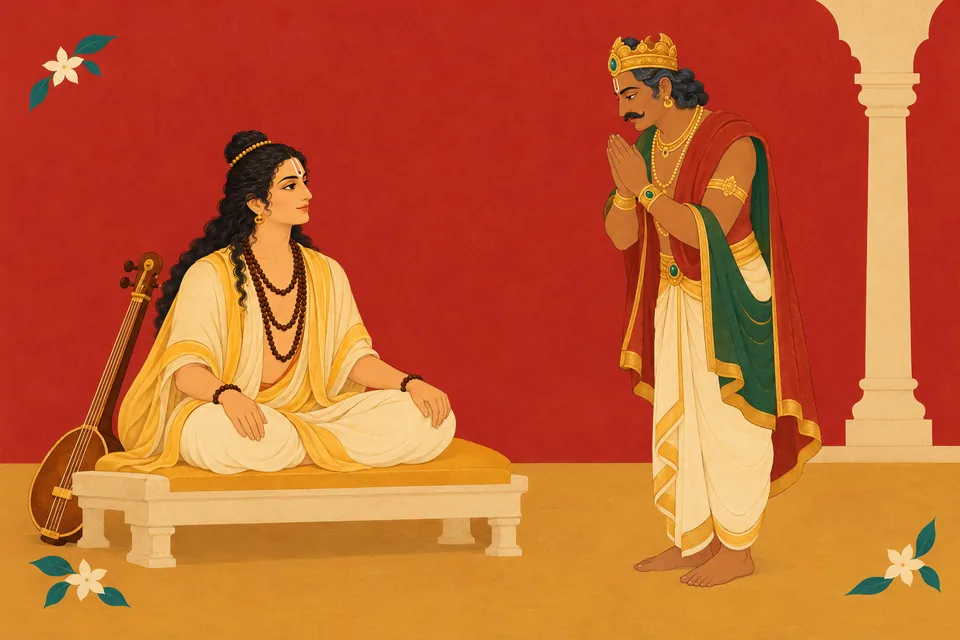
AI-created devotional illustration · Chaupai 130
Curious Narada visits city, asks residents, comes Shilanidhi's house; king worships/receives and seats sage
Source reference and artistic choices
Gita Press code81 undated · PDF pages 142, 143 · printed pages 140, 141. Reader passage: bala-kanda-chaupai-130. Printed numbering may differ.
Source facts
- City beautifulmenwomen compared to embodiedmanyKama/Rati, notactualmultiples; king namedSHILANIDHI with abundant horses elephants army/wealthlikeshundredIndras, notonlyoneIndra
- Daughter namedVishvamohini, beautycaptivatesSri, herselfHarimaya/allqualities, swayamvara manykings; outside selected receptionimage
- CuriousNarada enters city asksresidents then goeskinghouse; king honors/worships and seatsNarada; curiosity not inventedmerriment/kindintent
Artistic choices
- New imaginedmiddleageddeepbrownKingShilanidhi darkmoustache shortwavygrayinghair goldcrowntealgem rustupperdrape creamdhoti greensash modestgoldjewels; exactagefacewardrobe/crown notauthenticated, no earlierkinglikeness reused
- Established imaginednaturalbrownclean-shaven Narada blackhairknot Vaishnavcreamochre/darkbeads seatedcrosslegged plainlowbench ochrecushion, bothhandrestknees; standingking namaste respectfulheadincline exactgesture/furniture artistchoices notsource-specifiedceremony
- Customaryvina besideNarada notplayed; simplecreamcolumn/arch rustflatfield ochrefloor fewwhiteflowers/tealleaves imaginedpalace decor, no crowd/princess/celestialcomparisons literalized
An imaginative interpretation, not a historical portrait or documentary evidence.
बसहिं नगर सुंदर नर नारी। जनु बहु मनसिज रति तनुधारी।। तेहिं पुर बसइ सीलनिधि राजा। अगनित हय गय सेन समाजा।। सत सुरेस सम बिभव बिलासा। रूप तेज बल नीति निवासा।। बिस्वमोहनी तासु कुमारी। श्री बिमोह जिसु रूपु निहारी।। सोइ हरिमाया सब गुन खानी। सोभा तासु कि जाइ बखानी।। करइ स्वयंबर सो नृपबाला। आए तहँ अगनित महिपाला।। मुनि कौतुकी नगर तेहिं गयऊ। पुरबासिन्ह सब पूछत भयऊ।। सुनि सब चरित भूपगृहँ आए। करि पूजा नृप मुनि बैठाए।।
Beautiful men and women dwell in that city, as though many Kamadevas and Ratis had taken living form. In that city lives a king who is a treasury of virtue, with countless horses, elephants, and armies at his command.