Parvati Enters the Mandap
Bala Kanda, Chaupai 100
Doha 100 · Movement 1 of 3
Keep this contemplation
Preserve, print, or share
The gods are received with honour and seated according to rightful place. The Vedic altar gleams beneath the wedding canopy, and women sing auspiciously around sacred vessels. At the centre stands a divine throne fashioned with skill beyond description.
Shiva bows to the Brahmins and takes his seat, holding Raghurai within his heart. Even at his own wedding, the bridegroom's inward gaze rests upon Ram.
Then the sages call Uma. Her companions lead her into the mandap, adorned for the rite. The gods are overwhelmed by her beauty, yet inwardly bow because they recognize Jagadambika. She is beauty held within perfect measure, beyond the praise of any poet.
Parvati enters beneath the canopy, and every god bows silently before the bride.
Read the passage from the Manas
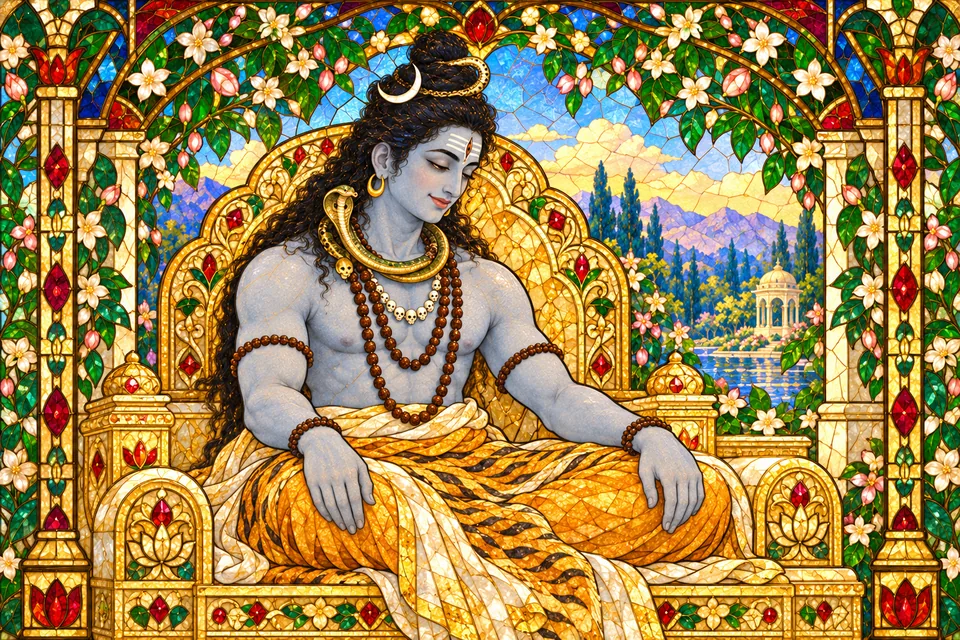
AI-created devotional illustration · Chaupai 100
Shiva seated on divine throne in inward remembrance after bow
Source reference and artistic choices
Gita Press code81 undated · PDF pages 116 · printed pages 114. Reader passage: bala-kanda-chaupai-100. Printed numbering may differ.
Source facts
- Brahma creates a beautiful divine throne beyond description
- After bowing head to Brahmins, Shiva sits inwardly remembering his lord Raghurai
- Image selects seated remembrance after the bow; no actual bow or literal Rama vision shown, Uma's later arrival outside scene
Artistic choices
- Approved conventional Shiva groom appearance reused, soft closed/lowered eyes and resting hands imply quiet remembrance, source identifies unseen remembrance as Rama; exact posture/age/face/ash marks/serpents/crescent/beads/ivory skullbeads/tiger cloth precise forms imagined unauthenticated
- Ornate golden throne/carvings/rose-green accents/floral glass pavilion/mountain garden imagined, source throne-maker Brahma not depicted performing craftsmanship, no authored mind-vision or marriage fulfillment
An imaginative interpretation, not a historical portrait or documentary evidence.
बोलि सकल सुर सादर लीन्हे। सबहि जथोचित आसन दीन्हे।। बेदी बेद बिधान सँवारी। सुभग सुमंगल गावहिं नारी।। सिंघासनु अति दिब्य सुहावा। जाइ न बरनि बिरंचि बनावा।। बैठे सिव बिप्रन्ह सिरु नाई। हृदयँ सुमिरि निज प्रभु रघुराई।। बहुरि मुनीसन्ह उमा बोलाई। करि सिंगारु सखीं लै आई।। देखत रूपु सकल सुर मोहे। बरनै छबि अस जग कबि को है।। जगदंबिका जानि भव भामा। सुरन्ह मनहिं मन कीन्ह प्रनामा।। सुंदरता मरजाद भवानी। जाइ न कोटिहुँ बदन बखानी।।
All the gods were respectfully summoned and each was given a seat befitting their station. The wedding altar was prepared according to Vedic rites, and beautiful, auspicious kalashas were lovingly arranged.