When the Lake Becomes a River
Bala Kanda, Chaupai 39
Doha 39 · Movement 1 of 2
Keep this contemplation
Preserve, print, or share
Some travellers force their way to the Manas through hardship, yet arrive carrying the very dullness that barred the road. Sleep closes their eyes at the water's edge. A bitter inward cold grips the heart, and though the lake lies before them, they cannot bathe. They return with pride untouched and teach later travellers to blame the water they never entered.
Those upon whom Ram's gracious glance has fallen cross the same country without being mastered by its obstacles. They enter reverently, and the fires of physical, mental, and divine suffering cannot consume them. Love for Ram's feet keeps them near. Whoever truly wishes to bathe is therefore directed first toward the company of saints, where the heart learns warmth, attention, and surrender.
As Tulsidas beholds the lake with the eyes of the mind, his understanding grows clear. Joy rises, love overflows, and poetry breaks from the Manas as a river filled with the spotless fame of Ram. The river receives the auspicious name Sarayu. Worldly wisdom and Vedic truth form its beautiful banks, while its current tears out Kali's sins like grass, tree, and root swept from dark soil.
The still lake opens, and Ram's glory runs from it as the Sarayu.
Read the passage from the Manas
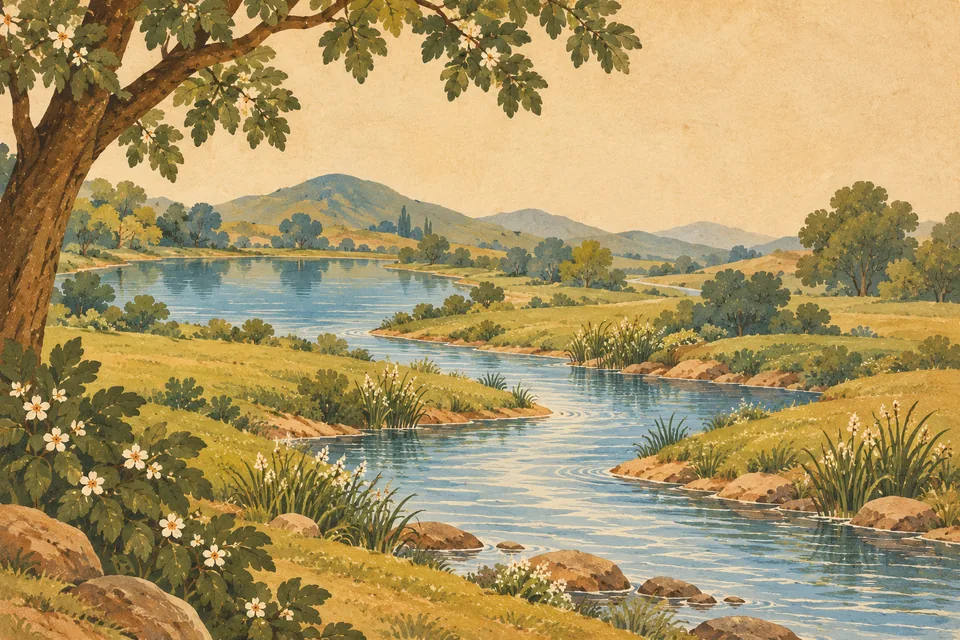
AI-created devotional illustration · Chaupai 39
A clear river flows from an imagined lake between two meadow banks, evoking the joyful river of poetry.
Source reference and artistic choices
Gita Press code81 undated · PDF pages 63, 64 · printed pages 61, 62. Reader passage: bala-kanda-chaupai-039. Printed numbering may differ.
Source facts
- After obstacles to immersion and the invitation to satsang under Rama grace, clear contemplative immersion brings joy and a river of poetry filled with Rama glory
- The river is named Sarayu, with worldly tradition and Vedic understanding as its two banks
Artistic choices
- Select the poetry-river flowing from the story-lake comparison; symbolic landscape rather than literal water from a poet
- Lake and winding continuous river, hills, meadow banks, tree, flowers, reeds, rocks, colours and light imagined; no actual Sarayu or Manasarovar geography
An imaginative interpretation, not a historical portrait or documentary evidence.
जौं करि कष्ट जाइ पुनि कोई। जातहिं नींद जुड़ाई होई।। जड़ता जाड़ बिषम उर लागा। गएहुँ न मज्जन पाव अभागा।। करि न जाइ सर मज्जन पाना। फिरि आवइ समेत अभिमाना।। जौं बहोरि कोउ पूछन आवा। सर निंदा करि ताहि बुझावा।। सकल बिघ्न ब्यापहि नहिं तेही। राम सुकृपाँ बिलोकहिं जेही।। सोइ सादर सर मज्जनु करई। महा घोर त्रयताप न जरई।। ते नर यह सर तजहिं न काऊ। जिन्ह के राम चरन भल भाऊ।। जो नहाइ चह एहिं सर भाई। सो सतसंग करउ मन लाई।। अस मानस मानस चख चाही। भइ कबि बुद्धि बिमल अवगाही।। भयउ हृदयँ आनंद उछाहू। उमगेउ प्रेम प्रमोद प्रबाहू।। चली सुभग कबिता सरिता सो। राम बिमल जस जल भरिता सो।। सरजू नाम सुमंगल मूला। लोक बेद मत मंजुल कूला।। नदी पुनीत सुमानस नंदिनि। कलिमल तृन तरु मूल निकंदिनि।।
If someone forces his way there despite the hardship, sleep and shivering overcome him at once. The fierce chill of jadta (spiritual dullness) grips his heart; such a soul receives no share of the Manas kingdom.