Smoke in the Sandalwood Grove
Bala Kanda, Chaupai 10
Sortha 10 · Movement 1 of 3
Keep this contemplation
Preserve, print, or share
Within the rough composition shines the generous name of Raghupati, holy essence of Veda and Purana, dwelling place of auspiciousness and destroyer of misfortune. On Kailash, Shiva chants that name with Uma. Its resonance passes through scripture, cremation ground, palace, and village path without losing its purity.
The finest poem without Ram's name remains incomplete, like a moon faced woman adorned with jewels but left without her garment. Even unskilled verse becomes worthy when the Lord's glory is marked upon it. Saints approach like bees, taking sweetness wherever they find it and refusing to be distracted by the coarseness of the flower.
Tulsidas takes courage from the transforming power of company. Smoke entering a grove of aloe wood leaves behind its natural harshness and comes away fragrant. His speech may be rustic, but the subject is Ram's world blessing story. Association will do what talent cannot.
Smoke leaves the fragrant grove carrying sandalwood into the wind.
Read the passage from the Manas
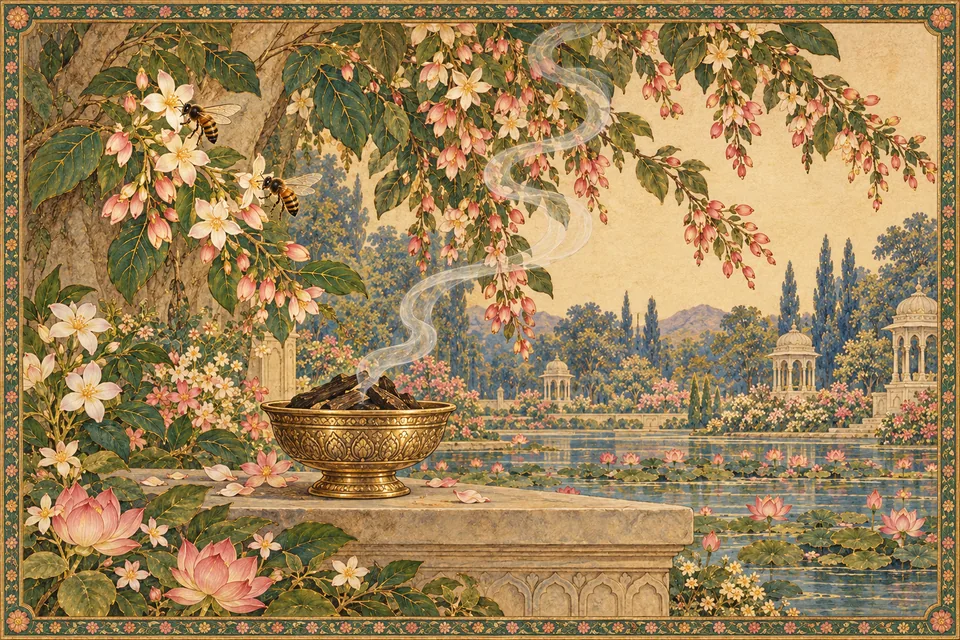
AI-created devotional illustration · Chaupai 10
Fragrant agarwood smoke rises beside two bees on flowers, illustrating comparisons of good association and gathering virtues.
Source reference and artistic choices
Gita Press code81 undated · PDF pages 32, 33 · printed pages 30, 31. Reader passage: bala-kanda-chaupai-010. Printed numbering may differ.
Source facts
- Rama's name gives merit to poetic speech; Shiva with Uma repeats it
- Saints gather virtues like bees
- Smoke sheds harshness through association with fragrant agarwood
Artistic choices
- Incense bowl and two bees select two symbolic comparisons from the grouped passage
- Garden, floral frame, ledge and smoke arrangement imagined; no narrated event
An imaginative interpretation, not a historical portrait or documentary evidence.
एहि महँ रघुपति नाम उदारा। अति पावन पुरान श्रुति सारा।। मंगल भवन अमंगल हारी। उमा सहित जेहि जपत पुरारी।। भनिति बिचित्र सुकबि कृत जोऊ। राम नाम बिनु सोह न सोऊ।। बिधुबदनी सब भाँति सँवारी। सोन न बसन बिना बर नारी।। सब गुन रहित कुकबि कृत बानी। राम नाम जस अंकित जानी।। सादर कहहिं सुनहिं बुध ताही। मधुकर सरिस संत गुनग्राही।। जदपि कबित रस एकउ नाही। राम प्रताप प्रकट एहि माहीं।। सोइ भरोस मोरें मन आवा। केहिं न सुसंग बडप्पनु पावा।। धूमउ तजइ सहज करुआई। अगरु प्रसंग सुगंध बसाई।। भनिति भदेस बस्तु भलि बरनी। राम कथा जग मंगल करनी।।
Within this poem shines the generous name of Raghupati, supremely holy, the very essence of the Puranas and the Vedas. It is the abode of all that is auspicious, the destroyer of all that is not. Shiva himself chants it ceaselessly, together with Uma. Even the most wondrous composition crafted by the finest poet cannot truly shine without the name of Ram. Just so, a moon-faced woman adorned in every way loses her splendor if she is without garments.