The Crow Judges the Cuckoo
Bala Kanda, Chaupai 9
Doha 9 · Movement 1 of 2
Keep this contemplation
Preserve, print, or share
A crow hears the cuckoo and condemns the song as harsh. A crane laughs at the swan, and a frog in its muddy hollow mocks the rain thirsty chatak. Each judgment travels no farther than the nature of the one who gives it.
Tulsidas welcomes the laughter of those who find no sweetness in poetry and no love for Ram's feet. His language is simple, his understanding limited, and he grants them the pleasure of ridicule without complaint. Those devoted to Hari and Hara will taste another flavour. Recognizing Ram bhakti within the words, good listeners will receive the story with praise.
The poet makes no defence of his learning. Letters, meanings, metres, ornaments, emotions, rasas, faults, and virtues of composition stand like a vast treasury whose keys he does not claim to possess. On the blank page he writes one confession: he is neither a poet nor a master of speech. Then he continues, because love has given him something scholarship cannot supply.
The crow delivers its verdict; from the next branch, the cuckoo keeps singing.
Read the passage from the Manas
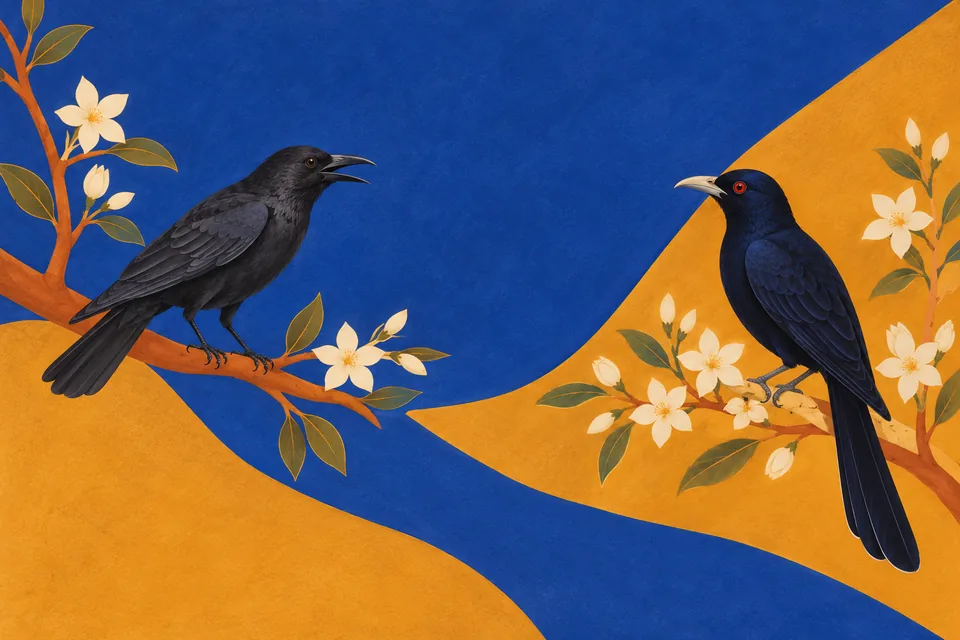
AI-created devotional illustration · Chaupai 9
A crow and a red-eyed male koel face one another on flowering branches, illustrating a poetic comparison.
Source reference and artistic choices
Gita Press code81 undated · PDF pages 31, 32 · printed pages 29, 30. Reader passage: bala-kanda-chaupai-009. Printed numbering may differ.
Source facts
- Crow calling the koel's sweet voice harsh illustrates uncharitable mockery
- Other comparisons contrast mocking and receptive responses; poet humbly disclaims skill
Artistic choices
- Two-bird arrangement selects one comparison from grouped passage
- Branches, blossoms and colour fields imagined; no literal bird conversation
An imaginative interpretation, not a historical portrait or documentary evidence.
खल परिहास होइ हित मोरा। काक कहहिं कलकंठ कठोरा।। हंसहि बक दादुर चातकही। हँसहिं मलिन खल बिमल बतकही।। कबित रसिक न राम पद नेहू। तिन्ह कहँ सुखद हास रस एहू।। भाषा भनिति भोरि मति मोरी। हँसिबे जोग हँसें नहिं खोरी।। प्रभु पद प्रीति न सामुझि नीकी। तिन्हहि कथा सुनि लागहि फीकी।। हरि हर पद रति मति न कुतरकी। तिन्ह कहुँ मधुर कथा रघुवर की।। राम भगति भूषित जियँ जानी। सुनिहहिं सुजन सराहि सुबानी।। कबि न होउँ नहिं बचन प्रबीनू। सकल कला सब बिद्या हीनू।। आखर अरथ अलंकृति नाना। छंद प्रबंध अनेक बिधाना।। भाव भेद रस भेद अपारा। कबित दोष गुन बिबिध प्रकारा।। कबित बिबेक एक नहिं मोरें। सत्य कहउँ लिखि कागद कोरे।।
The mockery of the wicked is, in truth, to my benefit. The crow calls the koel's song harsh. The crane laughs at the hans (swan); the frog mocks the chatak bird. The impure always ridicule what is pure. Those who have neither love for Ram's lotus feet nor any rasa (taste) for poetry, for them let this laughter itself be a source of pleasure. My language is simple, my understanding poor. This work deserves to be laughed at, and there is no fault in laughing.