Kaikeyi Calls Ram Dearer than Her Own Life
Ayodhya Kanda, Chaupai 15
Doha 15 · Movement 1 of 2
Keep this contemplation
Preserve, print, or share
Kaikeyi assures Manthara that no anger lives within her. If Ram is crowned tomorrow, the day will be blessed, and the maid may ask for any gift that pleases her heart.
The solar dynasty's custom is beautiful: the elder brother rules and the younger serves. All the queen mothers are dear to her, and Ram gives each natural affection while showing Kaikeyi special tenderness she has tested herself.
She prays that in another birth she might belong again to Ram and Sita's family. Ram is dearer than her own breath. The scene lets Kaikeyi speak her uncorrupted truth fully before fear covers it, preserving the depth of love that makes the coming reversal tragic.
Before fear remakes her vision, Kaikeyi names Ram as dearer than the breath sustaining her life.
Read the passage from the Manas
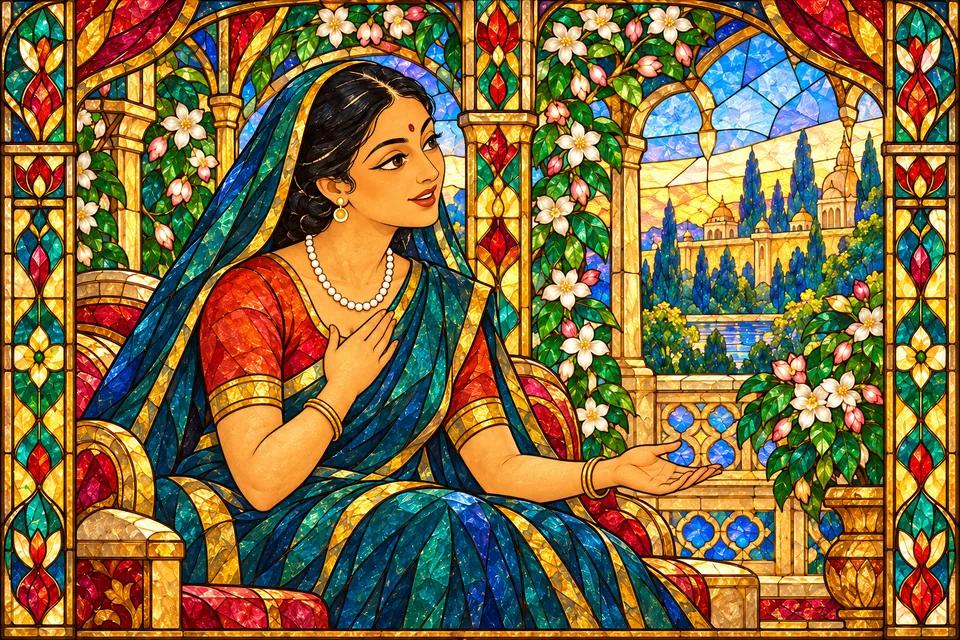
AI-created devotional illustration · Chaupai 15
Kaikeyi speaks warmly of Rama's proposed anointing and her affection for him, with Manthara offcrop; promised gift and wished-for future family relationship retained without depicting them as accomplished.
Source reference and artistic choices
Gita Press code81 undated · PDF pages 357, 358 · printed pages 355, 356. Reader passage: ayodhya-kanda-chaupai-015. Printed numbering may differ.
Source facts
- 1: Kaikeyi says her earlier rebuke was advice to dear-speaking Manthara and she is not angry with her, even in a dream.
- 2: She calls the day when Manthara's news proves true an auspicious good day.
- 3: She states the pleasing Solar-lineage custom: elder brother is lord, younger brother serves; not a reversal of their roles.
- 4: If Rama's anointing truly happens tomorrow, she offers to give the maid whatever pleasing gift she asks. No actual gift or completed coronation is asserted.
- 5–6: All mothers are naturally dear to Rama like Kaushalya; Kaikeyi says he loves her especially and she has tested his affection.
- 7: She wishes that, if providence grants another birth through kindness, Rama may be her son and Sita her daughter-in-law. She does not wish to become their daughter or daughter-in-law, and no actual birth is narrated.
- 8: She says Rama is dearer than life and asks Manthara why his anointing causes her distress. These are Kaikeyi's attributed words; later changed attitude belongs to later units.
- All eight source couplets on PDF357–358 retained; stable reader numbering, historic translations and attribution unresolved without corpus alteration.
Artistic choices
- Exact warm speaking expression, own heart palm and low outward open conversational hand are staging; no actual gift in hand.
- Kaikeyi appearance continues newly visually accepted D015 model; jeweled floral palace arch and palette are imagined E03 staging, not historical documentation.
- Complete source facts retained in metadata; source and existing translations unchanged.
- Actual jewel-pane throne-like seat, floral arch, palace balustrade and garden/pond towers are imagined staging, not source-certified architecture or documentary geography.
An imaginative interpretation, not a historical portrait or documentary evidence.
प्रियबादिनि सिख दीन्हिउँ तोही। सपनेहुँ तो पर कोपु न मोही।। सुदिनु सुमंगल दायकु सोई। तोर कहा फुर जेहि दिन होई।। जेठ स्वामि सेवक लघु भाई। यह दिनकर कुल रीति सुहाई।। राम तिलकु जौं साँचेहुँ काली। देउँ मागु मन भावत आली।। कौसल्या सम सब महतारी। रामहि सहज सुभायँ पिआरी।। मो पर करहिं सनेहु बिसेषी। मैं करि प्रीति परीछा देखी।। जौं बिधि जनमु देइ करि छोहू। होहुँ राम सिय पूत पुतोहू।। प्रान तें अधिक रामु प्रिय मोरें। तिन्ह कें तिलक छोभु कस तोरें।।
O sweet-spoken one, I have given you my counsel. Even in my dreams, I hold no anger toward you. That day alone is auspicious and full of blessing on which your words come true. The elder brother is lord, the younger serves him. This is the beautiful tradition of the House of the Sun. If Rama's coronation truly takes place tomorrow, then ask whatever boon delights your heart, dear friend. All the queen-mothers are as dear as Kausalya, and Rama loves them all with natural affection. They show me special tenderness. I have tested their love and seen it for myself. If Providence, by its grace, grants me another birth, may I become the daughter-in-law of Rama and Sita. Rama is dearer to me than my own life-breath. How could his coronation ever bring you distress?