Kaikeyi Rebukes the First Words against Ram
Ayodhya Kanda, Chaupai 14
Doha 14 · Movement 1 of 2
Keep this contemplation
Preserve, print, or share
Manthara begins indirectly. Who would heed her counsel, she asks, and who besides Ram is fortunate today, when the king is about to grant him the crown? She paints Kausalya as proud and Dasharatha as cunning.
Bharata is away, Kaikeyi sleeps upon a soft high bed, and the splendour of coronation advances without her. Each image is designed to make peaceful trust appear like dangerous blindness.
Kaikeyi hears the malice and commands Manthara to stop. If such household destroying speech returns, the maid will be harshly punished. At this moment the queen's discernment remains clear: she recognizes words aimed at dividing the family and rejects them before they can take root.
Kaikeyi's first answer is fierce loyalty, closing the door against any word that would divide the house.
Read the passage from the Manas
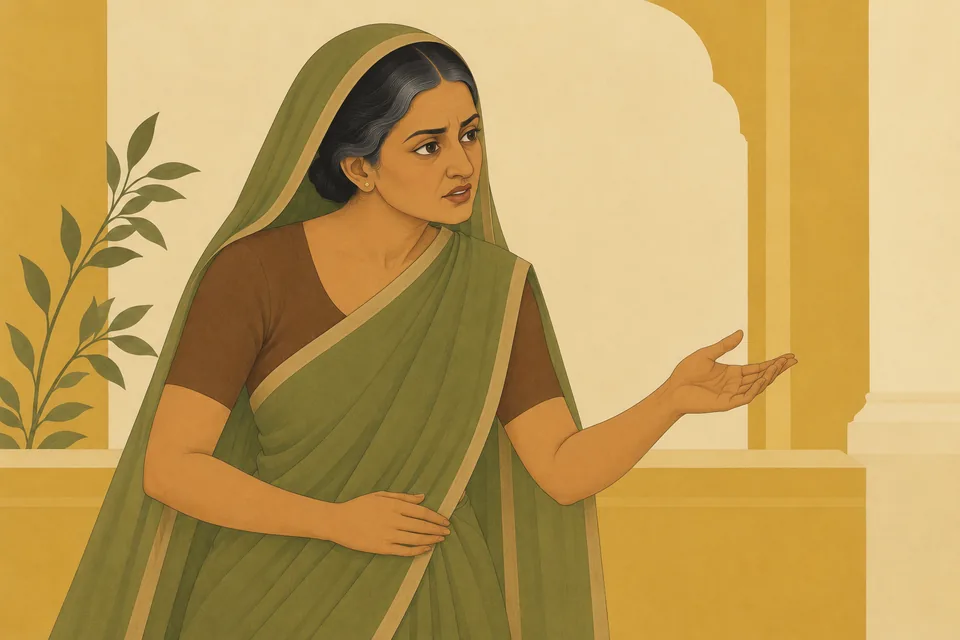
AI-created devotional illustration · Chaupai 14
Manthara speaks her resentful concerns to Kaikeyi, who remains offcrop; queen's understanding and rebuke retained as later parts of the complete passage.
Source reference and artistic choices
Gita Press code81 undated · PDF pages 356, 357 · printed pages 354, 355. Reader passage: ayodhya-kanda-chaupai-014. Printed numbering may differ.
Source facts
- 1: Manthara rhetorically says who would counsel us or give us strength to boast; these are her words.
- 2: She says who is well today except Rama whom the king is making crown prince; Rama has not gone away.
- 3–4: She says fate favors Kaushalya, whose pride cannot remain in her heart, and urges Kaikeyi to see the splendor that disturbed her own mind. These are character allegations, not objective judgments of Kaushalya.
- 5–6: Bharata is abroad, not nearby. Manthara alleges Kaikeyi is unconcerned, trusts the king to be under her control and enjoys soft-bed sleep while failing to see his craftiness; retain speech attribution.
- 7–8: Kaikeyi recognizes malice behind these sweet words, sternly rebukes Manthara as a home-breaker and threatens to pull out her tongue if she speaks so again. This is a verbal threat, not completed violence; selected earlier speaking portrait depicts no threat or injury.
- All eight source couplets retained; source and stable reader numbering unchanged. Historical metered English substitutions remain unresolved.
Artistic choices
- Exact speaking palm, lowered waist hand, expression and palace alcove are imagined staging; accepted Manthara appearance retained.
- The portrait selects earlier Manthara speech rather than asserting the later verbal threat has physically happened.
- Complete source facts retained in metadata; source and existing translations unchanged.
- Actual open-palm conversation pose, tense brow and service alcove architecture/leaf spray are imagined staging, no historical likeness.
An imaginative interpretation, not a historical portrait or documentary evidence.
कत सिख देइ हमहि कोउ माई। गालु करब केहि कर बलु पाई।। रामहि छाड़ि कुसल केहि आजू। जेहि जनेसु देइ जुबराजू।। भयउ कौसिलहि बिधि अति दाहिन। देखत गरब रहत उर नाहिन।। देखेहु कस न जाइ सब सोभा। जो अवलोकि मोर मनु छोभा।। पूतु बिदेस न सोचु तुम्हारें। जानति हहु बस नाहु हमारें।। नीद बहुत प्रिय सेज तुराई। लखहु न भूप कपट चतुराई।। सुनि प्रिय बचन मलिन मनु जानी। झुकी रानि अब रहु अरगानी।। पुनि अस कबहुँ कहसि घरफोरी। तब धरि जीभ कढ़ावउँ तोरी।।
She said, 'Who would bother giving us counsel, Mother? And by whose strength would I dare speak boldly?' 'Setting Rama aside, who is fortunate today? He to whom the king bestows the crown-prince title!' 'Fate has become most favorable to Kaushalya. Seeing this, her pride knows no bounds.' 'Why do you not go and see all the splendor yourself, the very sight of which has disturbed my mind?' 'Your son is in a foreign land, yet you have no worry. You think our husband is under your sway.' 'Sleep is very dear to you; your bed is high and soft. You do not perceive the king's cunning cleverness.' Hearing these words and sensing the malice within, the queen said sternly, 'Now hold your tongue.' 'If you ever speak such home-wrecking words again, I will have your tongue pulled out.'